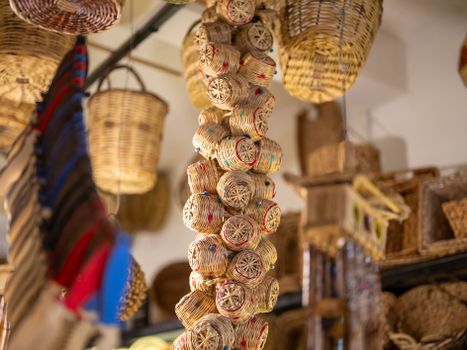
Baskets have long been more than just practical objects for carrying and storing goods—they are woven symbols, rich with cultural, spiritual, and artistic significance. Across centuries and continents, the humble basket has inspired artists to explore themes of community, identity, labor, and the interplay between utility and beauty. In this article, we delve into the symbolism of baskets in art and examine how basketry has influenced artists, shaping creative expression from ancient muralists to contemporary installation creators.
The Basket as a Universal Symbol in Artistic Traditions
Throughout history, baskets have appeared across artistic traditions, often carrying meanings that transcend their functionality. In ancient Egypt, baskets were depicted in tomb paintings as symbols of abundance and sustenance—a reflection of their role in storing grain, fruits, and daily necessities. Similarly, in Greco-Roman frescoes, baskets often held offerings to the gods, signifying devotion and the cyclical nature of life.
In many Indigenous cultures, baskets feature in origin stories and ceremonial art. For example, among the Pomo people of California, finely woven baskets signify both technical mastery and spiritual connection. Patterns woven into the baskets are not merely decorative—they encode stories, prayers, and clan identities, making each basket a vessel of cultural memory. Across Africa, Asia, and the Americas, baskets have been used in art to represent communal effort, the interconnectedness of nature and humanity, and the nurturing qualities of the feminine.
Basketry Techniques and Their Influence on Artistic Form
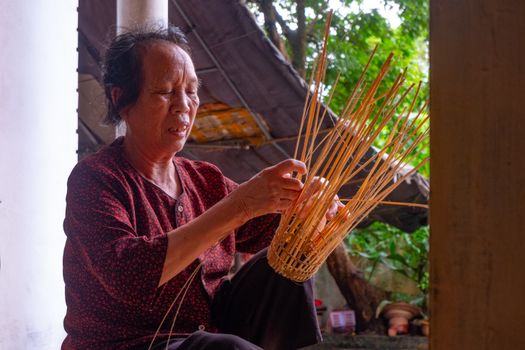
The technical artistry of basket weaving—coiling, plaiting, twining—has itself served as inspiration for artists in other media. The rhythmic, repetitive patterns found in basketry echo in textiles, ceramics, and even architecture.
For example, the Bauhaus movement in the early 20th century drew directly from craft traditions, including basketry, to inform its modernist principles. Artists such as Anni Albers, a Bauhaus textile innovator, referenced basket weaving techniques in her tapestries, emphasizing the tactile and structural qualities of woven forms. In contemporary art, sculptors like Ruth Asawa have translated basketry's looping wire forms into large-scale installations, blurring the boundary between craft and fine art.
The influence of basketry can also be traced in the development of abstract art. The repetition and geometry of basket patterns inspired painters like Paul Klee, who incorporated grid-like compositions reminiscent of woven structures. These techniques encourage viewers to contemplate the relationship between form, function, and meaning—a hallmark of modern art.
Baskets as Metaphors: Identity, Labor, and the Everyday
Beyond their physical form, baskets serve as powerful metaphors in art. Artists frequently use the image or concept of a basket to explore themes of identity, labor, and daily life.
For instance, in Diego Rivera's murals, baskets overflowing with flowers or produce are visual shorthand for the dignity of manual labor and the connection between people and the land. In the works of contemporary artists like Simone Leigh, baskets and basket forms speak to Black female identity, resilience, and the transmission of cultural knowledge. Leigh’s 2019 sculpture "Brick House" integrates basket motifs into a monumental figure, highlighting the intersection of craft, architecture, and the Black body.
The basket’s association with domesticity and care has also made it a symbol of the unseen labor, often performed by women, that sustains societies. Artists have used baskets as both subject and material to critique the undervaluation of domestic work, as seen in Judy Chicago’s iconic installation "The Dinner Party," where place settings recall woven motifs.
Baskets in Modern and Contemporary Art: From Object to Concept
In the 20th and 21st centuries, baskets have transcended their roles as objects to become concepts in contemporary art practice. Artists increasingly use basketry as a language to discuss issues such as sustainability, globalization, and identity politics.
Notably, the Japanese artist Shōno Tokuzō redefined bamboo basketry with abstract sculptures that challenge the distinction between utilitarian craft and fine art. In the United States, Ed Rossbach pioneered "fiber art," incorporating basket weaving into experimental forms and materials, thereby expanding the possibilities of the medium.
More recently, contemporary installations have employed baskets as symbols of migration and displacement. The 2015 Venice Biennale featured large suspended baskets by Ghanaian artist El Anatsui, constructed from bottle caps and found materials. These works evoke both the traditional basket’s form and the complex histories of trade, consumption, and colonialism.
Comparing Basket Symbolism Across Cultures and Eras
The symbolism of baskets in art is remarkably diverse, shaped by different cultural, spiritual, and historical contexts. The following table provides a comparative overview:
| Civilization/Culture | Artistic Use of Baskets | Symbolic Meaning | Example Artwork |
|---|---|---|---|
| Ancient Egypt | Tomb paintings, reliefs | Abundance, sustenance, afterlife | Basket scenes in Tomb of Nakht, 1400 BCE |
| Greco-Roman | Frescoes, mosaics | Offerings, fertility, celebration | Pompeii frescoes with fruit baskets |
| Native American (Pomo) | Ceremonial baskets, pictorial art | Spiritual connection, clan identity | Pomo feathered gift baskets |
| Modern Europe (Bauhaus) | Textiles, design | Craft-utility fusion, modernism | Anni Albers’ woven wall hangings |
| Contemporary Africa | Sculpture, installation | Globalization, transformation | El Anatsui’s bottle cap baskets |
Basketry’s Influence on Artistic Materials and Processes
Basketry’s impact on art is not limited to imagery and symbolism; it has also shaped artistic processes and material choices. Many artists have adopted basket-making methods to challenge the boundaries of traditional art forms.
For example, the use of organic materials—willow, bamboo, reeds—encourages artists to engage with notions of sustainability and impermanence. Eco-artists like Patrick Dougherty construct large public installations from woven saplings, creating immersive environments that highlight cycles of growth and decay.
Furthermore, the collaborative nature of basketry, which often involves community participation, has influenced socially engaged art projects. In the "Baskets of Hope" initiative in Rwanda, local artisans and international artists co-created basket-based artworks to promote healing after conflict. This blending of art, craft, and social practice demonstrates how basketry’s communal roots can foster cross-cultural dialogue and collective creativity.
Why the Symbolism of Baskets in Art Endures
The enduring appeal of baskets as artistic symbols lies in their universality and adaptability. Baskets are familiar everywhere, yet their meanings are shaped by distinct cultural narratives. They offer artists a rich vocabulary for addressing fundamental human concerns—nourishment, connection, identity, and transformation.
In an era of increasing interest in craft traditions and material culture, baskets continue to influence artists seeking to blur the lines between utility and aesthetics, tradition and innovation. As both motif and medium, basketry’s influence on art is as resilient and intricate as the objects themselves.