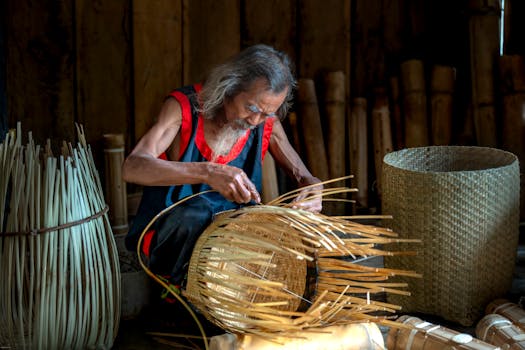
The Artistry Involved in American Traditional Basket Weaving
Basket weaving is an ancient practice found in nearly every culture across the globe, but the artistry embedded within American traditional basket weaving stands apart for its remarkable blend of function, culture, and creativity. Far more than utilitarian containers, these baskets are masterpieces that tell stories, embody traditions, and reflect the deep relationship between people and their environment. American traditional basket weaving spans centuries, with Indigenous nations, African American communities, and Appalachian artisans all contributing distinctive styles and techniques. This article delves into the artistry of American basket weaving—exploring the creative process, the symbolism woven into each piece, regional styles, and the ways modern artists keep this tradition alive.
The Creative Process: From Raw Materials to Masterpiece
At its core, American traditional basket weaving is a journey from nature to art. The process begins with the careful selection of raw materials—often sourced directly from the local environment. Common materials include black ash, white oak, river cane, sweetgrass, and willow. Each plant brings unique qualities to the final basket: black ash is prized for its pliability, while sweetgrass offers a fragrant aroma and subtle sheen.
Harvesting is a crucial step in the artistry. For instance, the Wabanaki people of the Northeast harvest black ash trees in a sustainable manner, pounding the logs to separate growth rings into splints. In the Southeast, Cherokee artisans expertly split river cane, a native bamboo, for their intricate double-weave baskets. Each material must be prepared with precision—split, scraped, soaked, or dyed—before the weaving even begins.
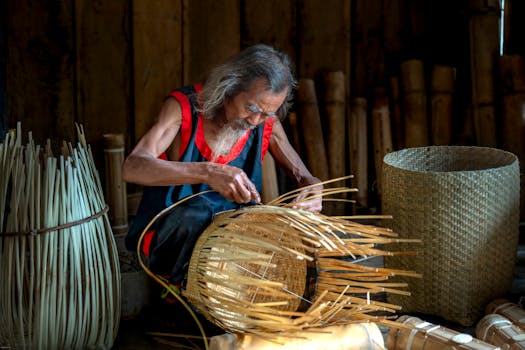
The weaver’s hands become the main tools for creation. Patterns are not merely decorative; they require technical mastery and often years of practice to perfect. Many traditional weavers begin learning as children, passing down the knowledge through generations. The choice of pattern, color, and shape is deliberate, balancing practical use with aesthetic vision. For example, a Choctaw wedding basket may feature a complex star motif symbolizing unity, while a Shaker apple basket prioritizes strength and symmetry.
Symbolism and Storytelling in Basket Designs
Beyond their physical form, American traditional baskets are deeply symbolic, serving as vessels of cultural memory. Patterns and motifs are chosen with intention, each carrying meaning unique to the community or family. For many Indigenous nations, basket designs encode stories, spiritual beliefs, and social status.
Take, for instance, the Pomo people of California, whose feathered gift baskets are adorned with precise geometric patterns. These designs are not arbitrary; they often represent elements from the natural world—mountains, rivers, or animals. The use of dyed sedge root and feathers from local birds adds layers of meaning, signifying respect for the environment and spiritual connections.
In the Gullah communities of South Carolina and Georgia, sweetgrass baskets preserve the legacy of African ancestors. The spiral patterns reflect West African weaving traditions, while each basket’s shape—such as a fanner basket or a rice basket—tells of the region’s agricultural history.
Symbolism also extends to the colors used in baskets. Natural dyes derived from roots, berries, and bark create a palette that echoes the local landscape. Red might symbolize life or war, black could represent the earth or the underworld, while undyed splints often signify purity or peace. These choices make each basket a work of art and a repository of cultural heritage.
Regional Styles: A Tapestry of Techniques Across America
American traditional basket weaving is not a monolith; it is a vibrant tapestry of regional styles, each shaped by geography, available resources, and cultural influences. The diversity is astounding, with each region producing baskets of distinctive form and function.
In the Northeast, the Wabanaki and Mohawk nations are renowned for their ash splint and sweetgrass baskets—often delicate, with finely woven lids and handles. In contrast, the Southeast is home to the Cherokee double-weave river cane basket, a marvel of engineering that is reversible and highly durable.
The Pacific Northwest produces sturdy cedar bark baskets, favored by the Tlingit and Haida for carrying fish and berries. These baskets often feature bold, wide bands and are sometimes woven watertight. In the South, the Gullah sweetgrass baskets, with their tight coils and elegant curves, are both beautiful and functional, used historically for winnowing rice.
Appalachian basketry, rooted in Scots-Irish and Native traditions, emphasizes utility with white oak egg baskets and split-oak market baskets. Shaker communities in New England developed minimalist, perfectly proportioned baskets prized for their craftsmanship.
The table below summarizes key differences among some of the major regional styles:
| Region/Group | Primary Material | Signature Techniques | Common Uses |
|---|---|---|---|
| Northeast (Wabanaki, Mohawk) | Black ash, sweetgrass | Splint weaving, lidded forms | Storage, ceremonial, gifting |
| Southeast (Cherokee) | River cane | Double-weave, dyeing | Food storage, trade |
| Pacific Northwest (Tlingit, Haida) | Cedar bark, spruce root | Twining, watertight baskets | Food gathering, ceremonial |
| South (Gullah) | Sweetgrass, bulrush | Coiling, spiral patterns | Winnowing, carrying |
| Appalachia | White oak | Ribbed construction, utility shapes | Egg gathering, markets |
Innovations and Adaptations: Basket Weaving in the Modern Era
While rooted in tradition, American basket weaving is not static. Artists are continually innovating, adapting old techniques for new purposes and audiences. This dynamic evolution is vital for the survival of basketry as both an art form and a livelihood.
Contemporary basket makers experiment with materials—incorporating recycled plastics, wire, or textiles alongside traditional woods and grasses. Some artists blend styles from different cultures, creating hybrid forms that speak to America’s diverse heritage. Others push the boundaries of scale and abstraction, creating baskets that are sculptural and designed for gallery exhibition rather than everyday use.
The economic significance of basket weaving has grown as well. According to the U.S. Census Bureau’s American Community Survey, there are over 5,000 self-identified basket makers in the United States as of 2020, with the market for artisan crafts exceeding $14 billion annually. Many weavers sell their work at festivals, museums, and online platforms, reaching collectors worldwide.
Educational programs and artist residencies have also played a crucial role in revitalizing the art. Organizations such as the Smithsonian’s National Museum of the American Indian and the John C. Campbell Folk School offer workshops that teach traditional techniques to new generations. These initiatives help sustain cultural knowledge and ensure that the artistry of basket weaving continues to thrive.
The Role of Community and Identity in Basket Weaving
For many American communities, basket weaving is far more than a craft—it is a pillar of cultural identity and social connection. The act of weaving together is both a metaphor and a practice, strengthening bonds within families and across generations.
Among the Cherokee, for example, basketry is a way to maintain language and traditional ecological knowledge. Elders teach children not only how to weave, but also how to identify plants, harvest sustainably, and interpret the stories encoded in patterns. In Gullah communities, sweetgrass basket making is an important economic activity, providing income and fostering pride in African heritage.
Basket weaving circles, festivals, and competitions offer spaces for artists to share techniques, showcase innovations, and celebrate collective achievements. The annual Basketmakers Gathering in Gatlinburg, Tennessee, attracts hundreds of weavers from across the country, highlighting the ongoing vitality of the tradition.
Moreover, the resurgence of interest in handcrafts—driven by the slow craft movement and a desire for sustainable, locally made goods—has brought new appreciation to the artistry of basket weaving. Baskets are now collected not just as artifacts, but as living expressions of culture and creativity.
Preserving the Artistry for Future Generations
Despite its resilience, American traditional basket weaving faces challenges. Threats to native plant species, loss of traditional knowledge, and the pressures of mass production all put the art at risk. However, dedicated efforts are underway to safeguard this unique heritage.
Nonprofit organizations and tribal governments are investing in resource management, ensuring that crucial plants like black ash and sweetgrass are protected from overharvesting and disease. Documentation projects—such as oral histories, instructional videos, and pattern archives—help preserve techniques that might otherwise be lost.
Museums and cultural centers play a vital role as well, offering exhibitions and hands-on workshops that engage the public. For instance, the National Basketry Organization sponsors juried exhibitions and maintains a digital gallery of contemporary and traditional works. These efforts not only honor the past but also inspire new generations to take up the art.
Ultimately, the artistry in American traditional basket weaving endures because of the passion and ingenuity of the weavers themselves. Each basket—whether utilitarian or ornamental, ancient or modern—embodies the spirit of its maker and the stories of a community woven through time.
Conclusion
The artistry involved in American traditional basket weaving is a celebration of creativity, skill, and cultural continuity. From the harvesting of raw materials to the intricate execution of symbolic designs, every stage of the process reflects a deep connection between people, place, and tradition. As regional styles evolve and modern artists push the boundaries of the craft, basket weaving remains a vibrant art form—one that preserves heritage while embracing innovation. By recognizing and supporting the artistry of basket weaving, we help ensure that these woven masterpieces continue to enrich American culture for generations to come.