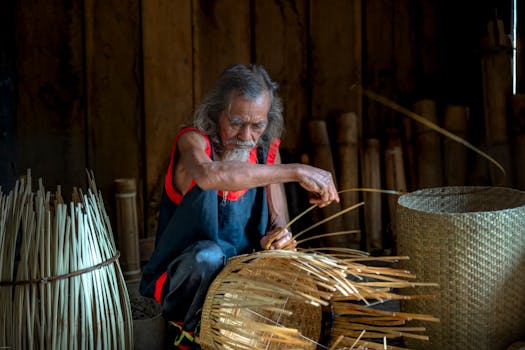
Basketry is one of the most enduring and versatile crafts in human history. In the United States, basketry’s roots stretch back thousands of years, weaving a story through Native American traditions, colonial adaptations, industrialization, and a vibrant modern revival. Today, American basketry is not only a testament to craftsmanship but also a living link to cultural heritage, artistic innovation, and social history. This article explores the fascinating journey of basketry in the USA, from its indigenous origins to its place in the hands of contemporary artists.
Native American Basketry: Origins, Techniques, and Cultural Significance
Long before European settlers arrived, Native American communities across North America had developed sophisticated basketry traditions. Archaeological evidence suggests that some of the oldest baskets in North America, discovered in Nevada’s Lovelock Cave, date back nearly 10,000 years. These early baskets were not only utilitarian—used for gathering, storing, and cooking—but also deeply symbolic, reflecting tribal identities and spiritual beliefs.
Different tribes developed unique styles and materials based on their environment. For example, the Pomo people of California became renowned for their intricate feathered baskets, while the Cherokee of the Southeast wove sturdy river cane baskets for everyday use. The Hopi and Apache tribes used yucca and willow, creating coiled baskets that remain iconic today.
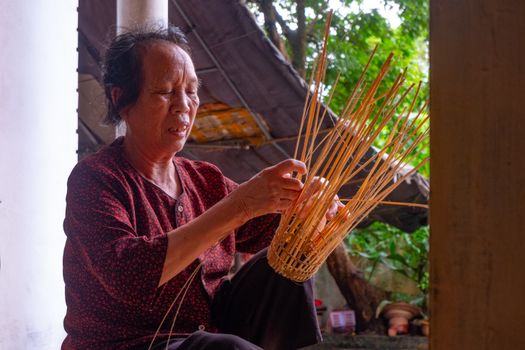
Basketry techniques such as coiling, twining, and plaiting were passed down through generations. Patterns and designs often carried stories or indicated clan membership. The use of natural dyes created baskets in a range of earthy hues, and some tribes incorporated shells, beads, or feathers for ceremonial pieces. By the 19th century, Native American basketry was not only central to daily life but had also become an important item of trade with European settlers.
Colonial and Early American Basketry: Adaptation and Innovation
As European settlers established colonies in the 17th and 18th centuries, they brought their own basketry traditions from England, Germany, and other countries. These settlers quickly adapted their practices to the resources and conditions of the New World, often learning from local Native American techniques.
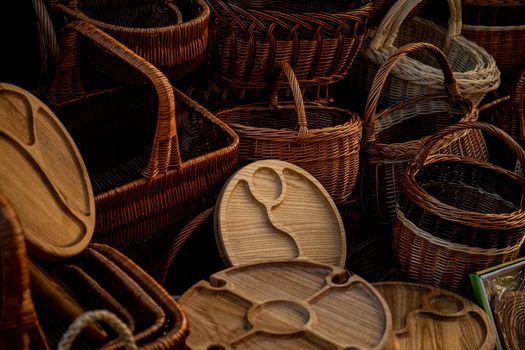
Colonial baskets were essential for agricultural work, fishing, and household chores. Willow, oak, hickory, and ash became popular materials due to their flexibility and strength. In New England, the iconic "splint basket" emerged, crafted from thin strips of wood and used for everything from egg gathering to carrying firewood.
During the 19th century, basketmaking became a rural cottage industry, particularly in regions like the Appalachian Mountains and Shaker communities. Shaker baskets, with their precise craftsmanship and minimalist beauty, became highly prized for their utility and aesthetics. By the mid-1800s, basketmaking was both a practical necessity and a source of income for many American families.
Industrialization and the Decline of Traditional Basketry
The late 19th and early 20th centuries brought dramatic changes to American basketry. With the rise of industrialization, mass-produced containers such as metal buckets, cardboard boxes, and plastic bins began to replace handwoven baskets. The demand for traditional baskets declined rapidly, and many regional basketmaking traditions faced extinction.
However, industrialization also spurred new forms of basket production. Factories in New York, Massachusetts, and Ohio began producing baskets on a large scale, often employing entire communities. For example, by 1890, the town of Peterborough, New Hampshire, was home to several basket factories, producing thousands of baskets each week for shipment across the country.
Despite the pressures of modernization, some rural and Native American communities continued to preserve their basketry traditions. In the early 1900s, the Indian Arts and Crafts Board was founded to support indigenous crafts, including basketry, helping to revive interest and protect cultural heritage.
The Studio Craft Movement and Basketry’s Artistic Renaissance
The mid-20th century marked a turning point for American basketry. As part of the broader studio craft movement, artists began to view baskets not just as utilitarian objects but as vehicles for creative expression. This transformation was fueled by a renewed appreciation for handcraftsmanship and the unique beauty of natural materials.
Artists such as Ed Rossbach, Lissa Hunter, and Dorothy Gill Barnes began experimenting with unconventional materials, sculptural forms, and cross-cultural influences. By the 1980s, basketry had firmly established itself in the world of contemporary art, with works exhibited in galleries and museums nationwide.
Women played a particularly significant role in the basketry renaissance, both as artists and educators. Organizations like the National Basketry Organization (founded in 1999) helped foster a sense of community among makers and promoted educational programs, exhibitions, and publications.
Modern Basketry: Sustainability, Diversity, and Innovation
Today, basketry in the USA is more diverse and dynamic than ever. Artists and craftspeople embrace both tradition and innovation, exploring new materials such as recycled wire, plastics, and textiles alongside classic willow, reed, and sweetgrass. Sustainability has become a central concern, with many makers seeking to minimize environmental impact by using locally sourced, renewable, or recycled materials.
Modern basketry is also an avenue for cultural storytelling and social activism. Native American artists like Shan Goshorn (Cherokee) and Jeremy Frey (Passamaquoddy) use traditional forms to address issues such as identity, land rights, and environmental justice. Community-based projects, such as basketry workshops for at-risk youth or therapeutic weaving programs, demonstrate the craft’s continued relevance in contemporary society.
According to a 2022 survey by the American Craft Council, over 60% of professional basketmakers in the USA now sell their work online, and the market for handcrafted baskets has grown by 30% in the last decade. Major museums, including the Smithsonian Institution and the Museum of Fine Arts, Boston, have expanded their collections to include both historical and modern basketry.
Comparing Basketry Traditions in the USA: A Data Overview
To better understand the diversity and evolution of basketry in the United States, the table below compares key characteristics of different basketry traditions.
| Tradition | Region | Primary Materials | Signature Techniques | Distinctive Features | Notable Example |
|---|---|---|---|---|---|
| Native American (Pomo) | California | Willow, sedge, feathers, shells | Coiling, twining | Feathered, miniature baskets | Pomo feathered gift baskets |
| Shaker | New England | Ash, oak | Splint, plain weave | Functional, minimalist design | Shaker apple baskets |
| Appalachian | Southeast US | White oak, hickory | Splint, ribbed construction | Sturdy, utilitarian, egg baskets | Egg baskets with ribbed handles |
| Contemporary Studio | Nationwide | Varied: reed, wire, recycled materials | Mixed media, sculptural | Innovative forms, artistic expression | Ed Rossbach’s experimental baskets |
The Enduring Legacy of American Basketry
The history and development of basketry in the USA reveals a craft that is both deeply rooted and remarkably adaptable. From the hands of Native American weavers to the studios of modern artists, basketry has served as a tool for survival, a symbol of identity, and a canvas for creativity. Its evolution mirrors broader social and cultural changes, reflecting shifting values, technologies, and artistic priorities.
As interest in handmade and sustainable goods continues to grow, American basketry is enjoying renewed appreciation. Museums, galleries, and festivals celebrate both traditional and contemporary works, while makers of all backgrounds continue to push the boundaries of what a basket can be.
Whether as a functional object, a work of art, or a means of cultural storytelling, the basket remains a powerful symbol of ingenuity, resilience, and interconnectedness in American history.