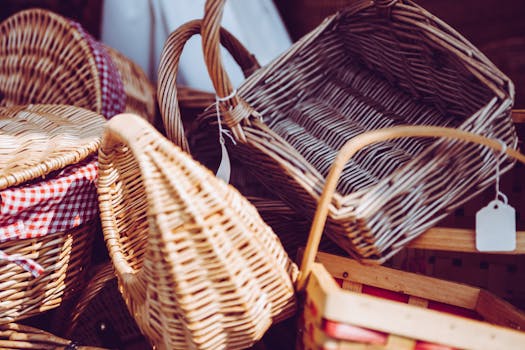
The Historical Significance of American Traditions Baskets
Baskets have played a unique and enduring role in American history, serving both functional and symbolic purposes across centuries. Among these, American traditions baskets encompass a wide variety of woven containers, each reflecting the cultural, social, and economic dynamics of their time. Today, these baskets are treasured not only as utilitarian objects but also as significant artifacts that reveal much about the country’s diverse heritage. This article delves into the historical significance of American traditions baskets, exploring their origins, evolution, cultural meanings, and lasting impact on American society.
Origins and Early Uses of Baskets in America
Basket weaving is one of the oldest known crafts in the Americas, with roots extending back thousands of years. Indigenous peoples across North America developed sophisticated basketry techniques, tailored to their environments and lifestyles. Archaeological evidence shows that Native Americans were creating baskets as early as 8,000 years ago, with some of the earliest examples discovered in the Southwest.
These early baskets were made from materials readily available in nature, such as reeds, willow, pine needles, and grasses. Their uses were varied and essential: baskets served as containers for gathering food, carrying goods, storing seeds, and even cooking—some types could withstand exposure to hot stones and water. The intricate designs and patterns woven into these baskets often carried symbolic meanings or indicated the basket’s intended use.
When European settlers arrived in North America, they adopted and adapted these basketry techniques, blending them with styles and materials from their homelands. This fusion marked the beginning of what we now recognize as American traditions baskets.
Evolution of Styles and Regional Variations
As the United States expanded, basket making evolved into a rich tapestry of regional styles, each with its own distinctive characteristics. In New England, for example, Shaker baskets became known for their simplicity, durability, and precise craftsmanship. The Shakers, a religious group known for their minimalist lifestyle, produced baskets as both daily tools and items for trade.
In the South, sweetgrass baskets crafted by the Gullah people of South Carolina and Georgia became famous for their coiled construction and decorative flair. These baskets trace their origins to West African traditions, brought to the Americas by enslaved Africans. Sweetgrass baskets are now considered a vital part of African American heritage and are recognized as a South Carolina state symbol.
The Midwest saw the popularity of splint baskets, made from black ash or oak, which were highly valued for their strength and flexibility. In the Southwest, Pueblo and Apache communities produced coiled and twined baskets with bold geometric patterns, reflecting their cultural narratives.
The diversity of American traditions baskets can be summarized in the table below:
| Region | Common Basket Type | Materials Used | Distinctive Features |
|---|---|---|---|
| New England | Shaker Baskets | Ash, maple splints | Simplicity, fine craftsmanship |
| Southeast | Sweetgrass Baskets | Sweetgrass, palmetto, pine needles | Coiled, ornate designs |
| Midwest | Splint Baskets | Black ash, oak | Strong, used for harvesting |
| Southwest | Pueblo/Apache Baskets | Willow, yucca, sumac | Geometric designs, ceremonial use |
Baskets as Symbols of Community and Identity
American traditions baskets have long been more than just practical containers. They are deeply woven into the social fabric of communities, often serving as symbols of identity, status, and continuity. For Native American tribes, basket making was (and remains) a communal activity, passed down through generations, with each tribe developing its own signature styles and motifs.
In colonial America, baskets played a central role in daily life, from market baskets for shopping to harvest baskets for fruit and grain. The act of weaving together natural materials mirrored the coming together of individuals to create strong, unified communities. In many regions, basket makers formed guilds or cooperatives, sharing techniques and supporting each other’s livelihoods.
Baskets also found their place in important life events. For instance, hope chests or wedding baskets were often gifted to brides, filled with items for their new households. Easter baskets, a tradition introduced in the 18th and 19th centuries, became a cherished symbol of renewal and celebration for American families.
Economic Impact and the Rise of Collectible Baskets
The significance of American traditions baskets extends into the economic realm. In the 19th and early 20th centuries, basket making became a vital cottage industry, especially in rural areas. Women, in particular, relied on basket weaving as a means of earning income while working from home. Towns such as Peterborough, New Hampshire, and Dresden, Ohio, became centers for commercial basket production, supplying baskets for apple picking, laundry, and general storage.
According to historical records, the Peterboro Basket Company, founded in 1854, is still in operation today, making it one of the oldest continuously running basket manufacturers in the United States.
In recent decades, American traditions baskets have gained prominence as collectible items and works of art. Notable examples include the Longaberger baskets, which rose to fame in the 1980s and 1990s. At its peak, the Longaberger Company employed over 8,200 people and generated annual sales exceeding $1 billion, illustrating the strong market demand for handcrafted baskets.
Collectors value baskets for their craftsmanship, historical context, and rarity. Some antique Native American baskets have sold at auction for more than $50,000, highlighting their cultural and monetary worth. Museums across the country, such as the Smithsonian Institution and the Heard Museum in Phoenix, Arizona, feature extensive collections of American traditions baskets, preserving them for future generations.
Preservation, Education, and Modern Revival
With the rise of industrialization and mass-produced goods, traditional basket making faced a decline in the 20th century. However, recent decades have witnessed a revival, fueled by a growing appreciation for handmade crafts and heritage skills. Organizations and cultural centers offer workshops and classes to teach traditional basketry techniques, aiming to keep these skills alive.
The National Basketry Organization, established in 1999, serves as a hub for artists, educators, and collectors, providing resources and hosting annual conferences. In Native American communities, basket making remains a powerful way to sustain cultural identity and pass down ancestral knowledge.
Educational institutions and museums also play a crucial role in preservation. The Heard Museum’s annual Indian Fair & Market, for example, draws over 15,000 visitors each year, showcasing the work of master basket weavers and raising awareness about the importance of these traditions.
Modern artisans are experimenting with new materials and contemporary designs, bridging the gap between past and present. Eco-conscious consumers are also turning to handwoven baskets as sustainable alternatives to plastic containers, reinforcing the relevance of this ancient craft in modern life.
Conclusion
The historical significance of American traditions baskets is woven into the very fabric of the nation’s story. From their ancient origins among Native peoples to their evolution through waves of immigration, industrialization, and modern revival, these baskets reflect the ingenuity, resilience, and creativity of those who made and used them. They continue to serve as symbols of identity, community, and artistry, connecting Americans to their shared past while inspiring new generations of makers and collectors. As both functional objects and cherished keepsakes, American traditions baskets remain an enduring testament to the country’s diverse heritage.