The Significance of Colors in Navajo Baskets: What Do They Symbolize?
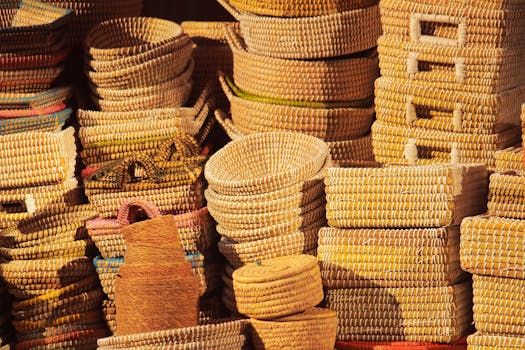
The artistry of Navajo basketry is world-renowned, not only for its intricate weaving and beautiful geometry but also for the deep cultural meanings woven into every strand. Among the most powerful elements of these baskets are their colors. For the Navajo people, colors are never chosen at random; each hue holds symbolic meaning, representing stories, beliefs, and connections to the land. Understanding the significance of colors in Navajo baskets opens a window into the worldview, spirituality, and history of the Navajo Nation. Let’s explore how the palette of these baskets is far more than aesthetic—it's a language in itself.
The Cultural Roots of Navajo Basket Colors
Navajo baskets—known traditionally as ts’aa’—have been central to Navajo ceremonial life for centuries. While the earliest baskets were primarily utilitarian, used for gathering food or storing goods, over time they evolved into sacred objects, particularly in ceremonies like the Kinaaldá (girl’s puberty rite) and the Enemy Way.
Colors in these baskets are deeply rooted in Navajo cosmology. Traditionally, natural dyes were used, harvested from the environment: black from sumac or piñon pitch, red from mineral and plant pigments, and white from natural yucca. Each color corresponds to significant elements in Navajo belief:
- Black: North, night, male energy, protection - White: East, dawn, female energy, purity - Red: South, sunset, life, and growth - Yellow: West, twilight, harvest, and maturityThese colors are not simply decorative; they encode the Navajo worldview, connecting each basket to the land, the cardinal directions, and the cycle of life.
Symbolism of Primary Colors in Navajo Baskets
Let’s take a closer look at the most common colors found in Navajo baskets and what they represent.
Black: In Navajo tradition, black is associated with the North and the sacred mountain Dibé Ntsaa (Mount Hesperus). It is a color of protection and spiritual strength. The black strands in a basket might represent the night, the time of dreaming when the spirit world is closest.
White: White stands for the East and Sis Naajiní (Mount Blanca). It’s the color of dawn, new beginnings, and the female principle. In ceremonial baskets, white often forms the starting spiral, guiding prayers and energy in a positive direction.
Red: Red ties to the South and Tsoodzil (Mount Taylor), symbolizing life, growth, and warmth. It’s a color of vitality and celebration, frequently used to mark the life-giving forces of the sun and earth.
Yellow: Yellow, linked to the West and Dook’o’oosłííd (San Francisco Peaks), represents maturity, harvest, and twilight. It’s the color of ripened corn and autumn, embodying fulfillment and wisdom.
These four primary colors also correspond to the Navajo Four Sacred Mountains, each anchoring the boundaries of the Navajo homeland and serving as spiritual guardians.
Beyond the Four Directions: Additional Colors and Their Meanings
While the four directional colors are foundational, Navajo basket weavers sometimes incorporate other hues, each with its own significance. As trade and access to new materials expanded, so did the color range of baskets.
Blue: Sometimes representing the sky or water, blue is less common in very traditional baskets due to the difficulty in sourcing natural blue dyes. When present, it can signify hope, peace, or rainfall—an essential blessing in the arid Southwest.
Green: Green symbolizes plant life, renewal, and harmony. Its inclusion in modern baskets can reflect prayers for growth or a connection to the earth’s bounty. Some weavers use green-dyed grasses or commercial dyes to achieve this effect.
Brown and Natural Tones: The natural tan or brown shades of basket materials (like willow, sumac, or yucca) are often left undyed to represent the earth itself, grounding the basket in the landscape of the Navajo homeland.
The careful choice of colors—even subtle variations—can make each basket a unique spiritual statement, bearing the hopes, prayers, and identity of its weaver.
Rituals, Stories, and Color Patterns in Navajo Baskets
Color patterns in Navajo baskets are never arbitrary. The arrangement of colors—spirals, steps, and geometric motifs—often tells a story or encodes a ritual meaning. The famous Navajo ceremonial basket, or “wedding basket,” is a perfect example. It typically features concentric rings of white, red, and black, each color corresponding to a stage in the Navajo creation story.
A common design begins with a white center (the emergence into the present world), followed by red and black bands (symbolizing trials, growth, or the passage of time). A distinctive feature is the "spirit pathway"—a small unbroken line, usually white, running from the center to the rim, allowing prayers and blessings to enter and exit the basket.
Navajo oral tradition teaches that improper use of color or design can disrupt the balance and harmony (hózhó) the basket is meant to embody. As a result, master weavers are highly respected not just for their technical skill, but for their deep cultural knowledge.
Traditional vs. Contemporary Navajo Basket Colors: A Comparison
Over the decades, the palette of Navajo baskets has evolved due to changing materials, markets, and artistic innovation. While some weavers maintain strict adherence to traditional colors and meanings, others experiment with commercial dyes and broader color spectrums.
Here’s a comparison of traditional and contemporary Navajo basket color use:
| Aspect | Traditional Baskets | Contemporary Baskets |
|---|---|---|
| Color Sources | Natural dyes (plants, minerals, earth) | Commercial dyes, synthetic colors |
| Main Colors | Black, white, red, yellow | Wide spectrum: blue, green, purple, pink, etc. |
| Symbolic Consistency | Strict adherence to cultural meanings | Freedom to reinterpret or innovate symbols |
| Purpose | Ritual, ceremonial, storytelling | Artistic expression, commercial sale, contemporary statements |
About 80% of ceremonial baskets made today still follow the traditional color symbolism, especially for use in rituals. Meanwhile, contemporary baskets—created for art markets or collectors—may feature bold purples, blues, or even metallic threads, reflecting the individual artist’s vision while still nodding to ancestral roots.
Colors as Identity: The Legacy of Navajo Basketry
For the Navajo, color is not just a visual choice—it’s a statement of identity, worldview, and prayer. Each basket embodies the weaver’s connection to the sacred land, the cosmos, and their ancestors. In a rapidly changing world, the continuity of color symbolism in Navajo baskets serves as a bridge between generations.
Navajo basketry has also become a powerful symbol of cultural resilience. During the 20th century, as outside influences and economic pressures mounted, basket weaving nearly vanished. Yet today, a new generation of weavers is reclaiming the tradition, blending ancient color meanings with contemporary artistry. The result is a vibrant, living art form that continues to carry the stories, hopes, and prayers of the Navajo people.
Preserving Meaning: How to Appreciate Navajo Basket Colors
If you find yourself drawn to the beauty of a Navajo basket, take a moment to look beyond the surface. Ask about the colors: What do they mean? What story does the pattern tell? Whether you’re a collector, a student of art history, or simply an admirer, understanding the symbolic language of colors enhances your appreciation.
Museums and cultural centers, such as the Navajo Nation Museum in Window Rock, Arizona, and the Museum of Indian Arts & Culture in Santa Fe, New Mexico, offer outstanding exhibits and resources. Workshops and artist demonstrations often provide context for how colors are chosen and what they signify.
When purchasing Navajo baskets, especially ceremonial pieces, it is respectful to learn about their intended use and symbolism. Supporting Native artists and respecting their traditions helps ensure this extraordinary art form—and its language of color—will thrive for generations to come.